
Granular Activated Carbon: The Complete Guide to Properties, Production, and Industrial Applications

  • ホーム /
  • ブログ /
  • Granular Activated Carbon: The Complete Guide to Properties, Production, and Industrial Applications
粒状活性炭のリンク画像

Water quality and air purity have become defining challenges for industries and municipalities worldwide. From drinking water plants contending with emerging contaminants like PFAS to chemical manufacturers facing increasingly stringent volatile organic compound (VOC) emission limits, the demand for reliable, cost-effective adsorption technologies continues to rise. Granular activated carbon has served as a cornerstone adsorbent material in these applications for decades, and its role is expanding as regulatory frameworks tighten and treatment requirements grow more complex. The global activated carbon market, valued at approximately USD 8.07 billion in 2025, reflects the scale and strategic importance of this material across water treatment, air purification, food and beverage processing, pharmaceutical manufacturing, and industrial pollution control sectors.

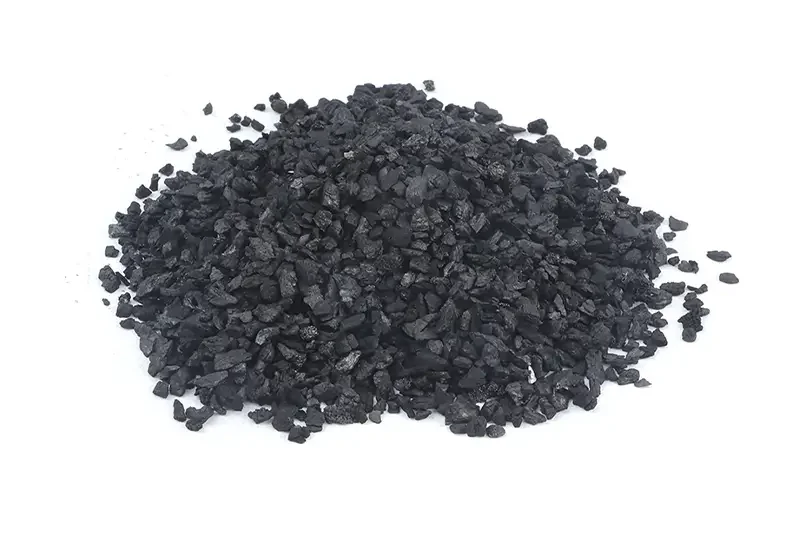
Granular activated carbon (GAC) is a highly porous carbonaceous adsorbent produced from carbon-rich raw materials such as coal, coconut shell, or wood through controlled carbonization and activation. With particle sizes typically ranging from 0.2 to 5 millimeters and internal surface areas reaching 800 to 1,500 square meters per gram, GAC is engineered for continuous-flow, fixed-bed filtration systems where it removes dissolved organic compounds, chlorine, taste and odor substances, VOCs, and a broad spectrum of industrial contaminants from both liquid and gas streams.

Understanding granular activated carbon means more than knowing its definition. It requires examining the raw materials that determine its base properties, the manufacturing processes that develop its internal pore architecture, the technical specifications that guide grade selection, and the application environments where it delivers measurable treatment performance. The following sections provide a comprehensive technical overview for engineers, plant operators, procurement specialists, and environmental professionals evaluating or optimizing GAC-based treatment systems.

Table of Contents

  • What Is Granular Activated Carbon and How Does It Work
  • Raw Materials and Manufacturing Process of Granular Activated Carbon
  • Key Technical Specifications and Performance Parameters
  • Primary Industrial Applications of Granular Activated Carbon
  • Granular Activated Carbon Compared to Other Forms of Activated Carbon
  • Market Trends and Future Outlook for Granular Activated Carbon

What Is Granular Activated Carbon and How Does It Work

Granular activated carbon is a form of activated carbon manufactured as irregularly shaped particles with controlled size distributions, typically expressed in mesh ranges such as 4×8, 8×30, or 12×40. Its defining characteristic is an extensive internal network of micropores, mesopores, and macropores that collectively provide an enormous surface area for physical adsorption, wherein dissolved or gaseous contaminant molecules adhere to the carbon surface through van der Waals forces without undergoing chemical transformation.

The adsorption mechanism of GAC relies on the principle of mass transfer and surface interaction. When water or gas flows through a fixed bed of granular activated carbon, contaminant molecules diffuse from the bulk fluid through the boundary layer surrounding each granule, migrate into the pore structure via pore diffusion, and ultimately attach to adsorption sites along the pore walls. The efficiency of this process depends on several interrelated factors: the pore size distribution relative to the molecular dimensions of the target contaminants, the surface chemistry of the carbon, the contact time between the fluid and the GAC bed, the concentration of competing adsorbates, and the operating temperature and pH of the system.

Unlike powdered activated carbon (PAC), which is dosed as a slurry into batch treatment processes and then filtered out, GAC is designed for long-term deployment in packed columns where it can remain in service for months or years before requiring replacement or regeneration. The granular form provides sufficient mechanical strength to resist crushing and attrition under the hydraulic load of continuous flow, while the controlled particle size balances adsorption kinetics with acceptable pressure drop across the bed. This combination of durability, capacity, and operational practicality has made GAC the dominant form of activated carbon for municipal drinking water treatment, industrial process water purification, groundwater remediation, and gas-phase filtration applications.

Raw Materials and Manufacturing Process of Granular Activated Carbon

Granular activated carbon is manufactured through a multi-stage industrial process beginning with the selection and preparation of carbon-rich feedstock, followed by carbonization in an oxygen-limited environment to produce a char intermediate, and concluding with activation—either physical activation using steam or carbon dioxide at 800 to 1,000 degrees Celsius, or chemical activation using reagents such as phosphoric acid or potassium hydroxide at 400 to 700 degrees Celsius—to develop the high-surface-area pore structure responsible for its adsorption performance.

The choice of raw material fundamentally shapes the final properties of the GAC product. Three categories of feedstock dominate industrial production. Coal-based granular activated carbon, typically produced from high-quality bituminous or anthracite coal, offers a versatile pore size distribution with good representation across the micropore, mesopore, and macropore ranges. It provides high mechanical strength, stable performance across varying water chemistries, and cost-effectiveness that makes it the workhorse material for municipal water treatment plants and large-scale industrial wastewater facilities. Coal-based GAC commonly delivers iodine values of 700 to 1,100 milligrams per gram and surface areas of 900 to 1,300 square meters per gram, with ash content typically in the range of 10 to 12 percent.

Coconut shell-based GAC represents the premium tier of granular activated carbon. Coconut shells yield a carbon with exceptionally high hardness and abrasion resistance, a predominantly microporous structure ideal for small-molecule adsorption, low ash content below 5 percent, and high purity that meets the stringent requirements of food-grade, pharmaceutical, and drinking water applications. Iodine values for coconut shell GAC routinely exceed 1,000 milligrams per gram, with surface areas reaching 1,200 to 1,500 square meters per gram. These properties also make coconut shell GAC the preferred material for gold recovery operations, where high mechanical strength prevents carbon attrition and gold loss during the aggressive agitation of carbon-in-pulp and carbon-in-leach circuits.

Wood-based GAC occupies a distinct niche characterized by a more developed mesopore and macropore network. This pore architecture makes wood-based carbon particularly effective for decolorization applications—removing color bodies from sugar syrups, organic acids, amino acids, and alcoholic beverages—where the larger target molecules require transport channels that microporous carbons cannot provide. Wood-based carbons also find application in wastewater treatment scenarios involving higher-molecular-weight organic pollutants.

The manufacturing sequence after raw material selection proceeds through crushing and sizing of the feedstock, carbonization at 400 to 700 degrees Celsius to drive off volatile compounds and form a carbon-rich char, and activation to develop the pore network. Physical activation with steam or carbon dioxide selectively gasifies portions of the carbon structure, opening and widening pores in a controlled manner. Chemical activation, in which the feedstock or char is impregnated with activating agents before heat treatment, can achieve higher surface areas and allows greater tuning of the pore size distribution. After activation, the material may be further processed through granulation, washing to remove residual chemicals and fines, drying, and final screening to the target mesh size. Quality control testing then verifies iodine number, apparent density, hardness, ash content, moisture, pH, and particle size distribution against specification.

Key Technical Specifications and Performance Parameters

The performance of granular activated carbon in any given application is governed by a set of standardized technical parameters, including iodine number (a measure of micropore volume and general adsorption capacity), specific surface area, carbon tetrachloride activity, molasses number or methylene blue number (indicators of mesopore development), apparent density, hardness and abrasion number, ash content, moisture content, pH, and particle size distribution expressed in mesh ranges. Selecting the appropriate grade requires matching these parameters to the molecular characteristics of the target contaminants and the hydraulic conditions of the treatment system.

The following table presents the typical specification ranges for the three primary GAC raw material types, illustrating how feedstock choice translates into measurable performance differences:

ParameterCoal-Based GACCoconut Shell GACWood-Based GAC
Iodine Value (mg/g)700–1,100900–1,200600–900
Specific Surface Area (m²/g)900–1,3001,000–1,500700–1,000
CTC Value (%)40–6550–7035–55
Ash Content (%)10–122–55–8
Moisture (%)≤5≤5≤8
Hardness (%)≥95≥98≥90
Bulk Density (g/cm³)0.45–0.550.48–0.600.35–0.45
Common Mesh Sizes4×8, 8×30, 12×406×12, 8×16, 8×30, 12×408×30, 12×40

The iodine number is the most widely cited quality indicator for GAC. It quantifies the milligrams of iodine adsorbed per gram of carbon under standardized conditions and correlates strongly with the material’s capacity for small-molecule organic contaminants. For drinking water treatment applications, iodine values of 900 milligrams per gram or higher are commonly specified to ensure adequate removal of disinfection byproduct precursors, taste and odor compounds, and trace organic pollutants. Industrial wastewater applications with higher contaminant loadings may accept iodine values in the 700 to 900 range where cost considerations favor more frequent media replacement over premium-grade carbon.

The carbon tetrachloride activity (CTC) value provides complementary information, specifically reflecting the volume of micropores below approximately 2 nanometers. Higher CTC values indicate greater capacity for very small molecules and are particularly relevant for VOC removal from gas streams and for solvent recovery applications. The molasses number or methylene blue number, by contrast, indicates mesopore volume and is the parameter of most interest for decolorization applications where color body molecules are too large to access micropores.

Particle size selection involves a trade-off between adsorption kinetics and hydraulic performance. Finer mesh sizes such as 12×40 provide faster adsorption rates due to shorter intraparticle diffusion paths and greater external surface area per unit volume, but generate higher pressure drop across the bed and may be more prone to clogging from particulate loading. Coarser meshes such as 8×30 offer lower pressure drop and reduced risk of fouling, at the cost of slower adsorption kinetics. The choice must account for the target empty bed contact time, the allowable head loss budget of the treatment system, and the presence of suspended solids in the feed stream.

Primary Industrial Applications of Granular Activated Carbon

Granular activated carbon is deployed across a remarkably broad range of industries, with its largest application volumes concentrated in municipal and industrial water treatment, air and gas purification, food and beverage processing, gold recovery from cyanide leach solutions, pharmaceutical and chemical purification, solvent recovery, and environmental remediation of contaminated groundwater and soil vapor.

Municipal drinking water treatment represents the single largest application segment for GAC. Treatment plants use granular activated carbon in gravity-fed or pressure filter vessels to remove natural organic matter that would otherwise react with chlorine disinfectants to form carcinogenic disinfection byproducts such as trihalomethanes and haloacetic acids. The same GAC filters simultaneously adsorb taste and odor compounds, including geosmin and 2-methylisoborneol produced by seasonal algal blooms, as well as trace concentrations of pesticides, herbicides, pharmaceutical residues, endocrine-disrupting compounds, and industrial solvents that may be present in source water. In recent years, the emergence of per- and polyfluoroalkyl substances as regulated drinking water contaminants has driven a new wave of GAC system installations, as GAC has demonstrated up to 100 percent effectiveness for removing longer-chain PFAS compounds such as PFOA and PFOS from drinking water supplies.

Industrial wastewater treatment constitutes another major GAC application domain. Chemical plants, petroleum refineries, textile dyeing operations, electronics manufacturing facilities, and pharmaceutical production sites employ GAC columns as polishing steps downstream of primary and secondary treatment to meet discharge permit limits for COD, color, and specific organic compounds. The ability to thermally regenerate spent GAC—heating it to 800 to 900 degrees Celsius in controlled-atmosphere furnaces to volatilize and destroy adsorbed contaminants while restoring most of the original adsorption capacity—makes GAC economically viable for high-volume industrial applications where single-use adsorbents would be cost-prohibitive.

In the air purification sector, GAC finds extensive use in industrial VOC emission control systems, where exhaust streams from coating lines, printing operations, chemical storage tanks, and semiconductor fabrication cleanrooms pass through GAC canisters or fixed beds to capture solvents, hydrocarbons, and odor compounds before atmospheric release. Indoor air quality applications include commercial building HVAC filtration, museum and archive environmental control, and residential air purifier cartridges.

The gold mining industry relies on a specialized grade of coconut shell GAC for the carbon-in-pulp and carbon-in-leach processes that recover dissolved gold from cyanide leach solutions. This application demands GAC with exceptional hardness to minimize attrition-related gold losses, high adsorption capacity for gold-cyanide complexes, and particle sizes in the 6×12 or 8×16 mesh range that facilitate screening separation from the ore pulp. Additional industrial GAC applications include catalyst support in chemical synthesis, decolorization of sugar syrups and organic acids in food processing, removal of chloramines from hemodialysis water, and purification of landfill gas and biogas for energy recovery.

Granular Activated Carbon Compared to Other Forms of Activated Carbon

Granular activated carbon occupies a distinct performance envelope among activated carbon forms. Compared to powdered activated carbon, GAC offers thermal regenerability, lower long-term operating costs, and suitability for continuous fixed-bed operation at the expense of slower initial adsorption kinetics. Compared to extruded or pelletized activated carbon, GAC provides lower pressure drop per unit bed depth and more flexible sizing options. Compared to honeycomb activated carbon, GAC delivers superior adsorption capacity per unit volume for liquid-phase applications but cannot match the ultra-low pressure drop characteristics that make honeycomb carbon the preferred choice for high-airflow gas-phase systems.

The comparison between GAC and powdered activated carbon illustrates the fundamental trade-off between adsorption speed and operational economics. PAC, with particle sizes in the 200 to 325 mesh range (approximately 0.044 to 0.074 mm), provides vastly greater external surface area per unit mass than GAC, enabling adsorption to reach equilibrium within minutes rather than hours or days. This makes PAC ideal for emergency spill response, seasonal taste and odor events in drinking water, and batch industrial processes where rapid contaminant removal is critical. However, PAC is used once and then disposed of; it cannot be practically regenerated. The resulting single-use cost structure makes PAC uneconomical for continuous, high-volume treatment where GAC with thermal regeneration cycles delivers lower total cost of ownership over the system lifetime.

Extruded activated carbon, formed by compressing carbon powder with binders into cylindrical pellets typically 0.8 to 5 mm in diameter, offers higher mechanical strength and lower dust generation than GAC. This form is preferred in gas-phase applications where bed compaction and channeling are concerns, such as in large-diameter industrial adsorber vessels. The regular pellet geometry provides more predictable pressure drop characteristics than irregular GAC granules, but the higher manufacturing cost and the binder content—which can contribute to ash and extractables—limit its use in high-purity liquid-phase applications.

The following table summarizes the key comparative characteristics across the four major activated carbon forms:

CharacteristicPowdered (PAC)Granular (GAC)Extruded/PelletizedHoneycomb
Typical Particle Size0.01–0.15 mm0.2–5 mm0.8–5 mm (cylindrical)50–100 mm (block)
Primary Application PhaseLiquidLiquid and GasGasGas
RegenerabilityNot practicalThermal regenerationThermal regenerationLimited
Adsorption KineticsVery fast (minutes)Moderate (hours to days)Slow (days)Moderate
System Pressure DropHigh (slurry separation)ModerateModerate to HighVery Low
Dust GenerationHighModerateLowVery Low
Typical Service LifeSingle use1–3 years per cycle1–3 years per cycle6 months to 2 years
Best Suited ForEmergency treatment, batch processesContinuous fixed-bed, water treatment, gold recoveryGas-phase VOCs, solvent recoveryHigh-airflow industrial exhaust, HVAC

Market Trends and Future Outlook for Granular Activated Carbon

The global activated carbon market is on a strong growth trajectory, expanding from USD 8.07 billion in 2025 to a projected USD 15.71 billion by 2030 at a compound annual growth rate of 14.1 percent. Granular activated carbon represents the largest product segment within this market, driven by sustained investment in municipal water treatment infrastructure, tightening regulations on drinking water contaminants including PFAS, expanding industrial emission control requirements, and growing adoption of activated carbon in pharmaceutical purification and food and beverage processing.

Water treatment remains the dominant demand driver for GAC. The U.S. Environmental Protection Agency’s proposed National Primary Drinking Water Regulation for six PFAS compounds, the European Union’s revised Drinking Water Directive, and similar regulatory initiatives in Japan, Australia, and other developed economies are compelling water utilities to install or upgrade GAC treatment systems. The capital investment required to equip the estimated thousands of affected drinking water systems represents a multi-billion-dollar market opportunity for GAC manufacturers and system integrators over the coming decade. Municipal wastewater treatment plants are also increasing their adoption of GAC as a tertiary treatment step to meet tightening effluent quality standards for trace organic contaminants.

The Asia-Pacific region accounts for the largest share of global activated carbon consumption, reflecting its concentration of manufacturing activity across the chemicals, textiles, electronics, and automotive sectors. As countries including China, India, Vietnam, and Indonesia continue to strengthen industrial emission and effluent standards, the demand for GAC in pollution control applications is expected to grow at rates exceeding the global average. China’s ongoing implementation of VOC emission control regulations, coupled with its Yangtze River Protection and Yellow River Protection initiatives addressing water quality, has made it the single largest national market for granular activated carbon.

Several emerging trends are reshaping the GAC market. The development of reactivation services—where spent GAC is returned to centralized thermal reactivation facilities rather than being disposed of in landfills—is improving the sustainability profile of GAC systems and reducing life-cycle costs for end users. Research into novel raw materials, including agricultural waste streams and biochar, is expanding the feedstock base beyond traditional coal, coconut, and wood sources. The integration of GAC adsorption with complementary treatment technologies, such as advanced oxidation processes, membrane filtration, and biological activated carbon systems that combine adsorption with biodegradation, is creating hybrid treatment trains that deliver superior contaminant removal compared to any single technology alone. As regulatory requirements continue to tighten and water scarcity intensifies globally, granular activated carbon will remain an essential tool in the treatment and purification arsenal for industries and municipalities worldwide.

This article provides a general technical overview of granular activated carbon for industrial and municipal applications. Selection of specific GAC grades and system designs should be based on detailed analysis of target contaminant profiles, operating conditions, feed water or gas composition, and applicable regulatory requirements.

Table of Contents
News
ジャングリニカル

We specialize in the manufacturing and global supply of high-performance industrial chemicals, with three core product lines: activated carbon, alumina (aluminum oxide), and titanium dioxide. Our activated carbon products are widely applied in water purification, air filtration, gold recovery, and industrial gas treatment.

お問い合わせはこちら