Activated Carbon for SO₂ Adsorption
What Is Activated Carbon for SO₂ Adsorption ?
Activated Carbon (SO₂) Adsorption means specifically chosen and engineered active carbon materials (including the standard high surface area class and the immersion variation) for the removal of SO₂ by combining the physical absorption, the catalytic oxidation and the chemical reaction mechanism which transforms the SO₂ into usable sulphuric acid or stable solid by-products.
Sulphur dioxide is produced as a by-product of primary burning and smelting in all places where sulphur containing fuels and minerals are treated – from coal to copper, lead, sulphuric acid production, coke furnaces, refuse incineration plants, and cement furnaces. The adsorption SO ₂ is oxidised to SO₂ in the presence of the catalyst on the surface of the active carbon and the surrounding water, which is then transformed into sulphuric acid — which may be recycled as a marketable by-product or safe disposal — allowing ACCF to become a dry-or semidry-process technique that eliminates the high amount of waste water and chemical agents required by traditional wet cleaning systems.
Due to the continuous tightening of SO₂ emission limits in the main industry economies worldwide, ACFGD systems provide industry operators with a technically demonstrated, operational flexibility and potential resource recovery alternative to lime based wet scrubbing in order to meet the requirements of a broad spectrum of smoke components and volume flow rates.
Key Advantages of Activated Carbon for SO₂ Adsorption
- Simultaneous Multi-Pollutant Removal in a Single Treatment Stage: Activated carbon desulfurization systems are capable of eliminating SO₂ together with NOₓ, dioxins, mercury vapor, and particulate-bound heavy metals from complex industrial flue gas within a single adsorption bed. This achieves multi-pollutant compliance, a performance that wet scrubbing systems focusing solely on SO₂ cannot achieve unless equipped with extra downstream treatment processes.
-
Dry Process Operation Eliminating Wastewater and Chemical Reagent Costs: Different from the wet scrubbing of lime slurry, SO ₂ is a dry or semi-dry process that does not produce any process waste water, does not require an alkaline reagent supply facility, and avoids the scaling, corrosion and waste water treatment costs that render wet FGD systems operational in a water-constrained industrial environment.
-
Sulfuric Acid Byproduct Recovery Offsetting System Operating Costs: Catalytic oxidation of adsorbed SO ₂ on active carbon surfaces yields concentrated sulphuric acid, which can be recovered and sold as industrial chemicals — converting waste gas compliance costs into revenue-generating byproduct flows that partially or completely offset the operational costs of the desulfurization system in high-SOO ₂ applications, e.g. copper smelting and sulphuric acid plant tail gas treatment.
-
Thermal Regeneration Restoring Full Adsorption Capacity for Continuous Operation: Spent activated carbon loaded with sulphur compounds is thermally regenerated at controlled temperatures, releasing concentrated SO ₂ for acid recovery and full recovery of adsorption capacity for reuse — enabling continuous closed loop desulfurization with controlled make-up carbon consumption instead of single use.
-
Compact Footprint Suited to Retrofit and Space-Constrained Installations: Activated carbon mobile bed desulfurization reactor achieves a high SO ₂ removal efficiency in a significantly smaller installation footprint than an equivalent wet scrubbing system — making ACFGD the preferred retrofit technique for existing installations, where space constraints make wet FGD installation impractical without significant civil engineering investment.
業界が直面する課題
Increasingly Stringent SO₂ Emission Limits Across Major Industrial Economies
Tightening regulatory thresholds for SO ₂ discharge from power plants, smelters, and chemical facilities require industrial operators to upgrade existing desulfurization systems to achieve removal efficiencies that older wet scrubbing and dry injection techniques cannot consistently deliver.
High SO₂ Concentration Variability in Industrial Flue Gas Streams
Fluctuating fuel sulfur content, variable production rates, and process upsets cause significant SO ₂ concentration swings in flue gas that challenge the adsorption capacity management and regeneration scheduling of fixed bed activated carbon desulfurization systems.
Simultaneous Multi-Pollutant Compliance Requirements
Industrial flue gas streams contain SO ₂ alongside NOx, dioxins, mercury and heavy metal compounds, which must all meet separate emission limits — requiring desulfurization solutions that can deal with multiple regulated pollutants in one comprehensive treatment system.
製品概要
活性炭
IND-ECL-40AM
Specific Use Scenarios — Activated Carbon for SO₂ Adsorption
Coal-Fired Power Plant Flue Gas Desulfurization
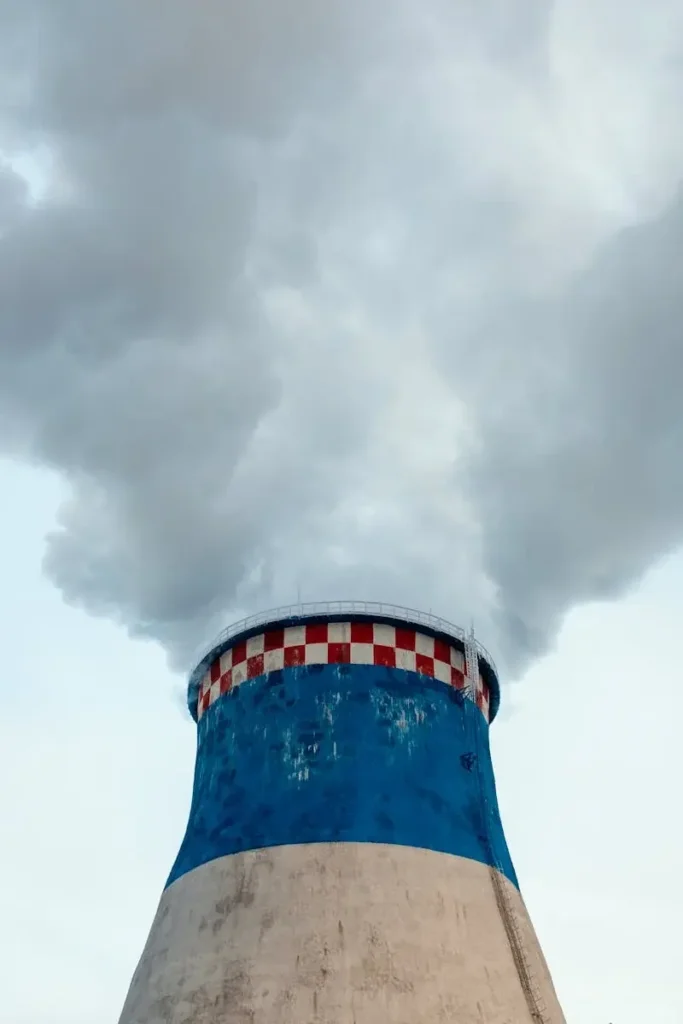
In coal-fired power plants, activated carbon moving bed reactors are installed downstream of electrostatic precipitators, with the purpose of adsorbing and catalytically oxidizing sulfur dioxide (SO₂) from large-volume flue gas flows prior to their release through the stack.
Within integrated activated coke desulfurization systems, this process achieves the simultaneous capture of SO₂, nitrogen oxides (NOₓ), mercury, and dioxins in a single reactor. This capability enables compliance with multi-pollutant emission standards—a feat that lime-based wet scrubbing systems cannot accomplish unless supplemented by extra downstream treatment processes.
Copper and Lead Smelter Tail Gas Treatment
Coke Oven and Steel Plant Sintering Flue Gas Treatment
Coke ovens and iron ore sintering operations in integrated steel plants emit complex flue gas mixtures containing SO₂ alongside NOₓ, dust, dioxins, and heavy metals. Activated carbon moving bed systems are applied in sintering machine tail gas treatment to achieve simultaneous removal of multiple regulated pollutants in a single compact installation — making activated carbon desulfurization the preferred technology for steel plant emission control upgrades where multi-pollutant compliance is required within constrained plant layouts.
Waste Incineration and Municipal Solid Waste Facility Emission Control
Incineration plants for municipal solid waste and industrial waste produce flue gas containing SO ₂ from sulphur fractions, together with HCl, dioxins, furans and heavy metals, which all have to comply with the stringent emission limit values laid down in the waste incineration legislation. The activated carbon injection and the fixed bed adsorption phase are integrated into the WWTP to absorb acid and organic micropollutants at the same time — providing the multi-pollutant removal capability required by MSW emission standards.
Sulfuric Acid Plant Tail Gas Polishing
Sulphuric acid production facilities based on the contact method are not able to fully convert SO ₂ into SO ₂ in the catalyst, which leads to residual SO ₂ in the exhaust gas of the plant, which needs to be treated prior to the release of the atmosphere. Activated carbon tail gas polishing systems absorb this residual SO ₂ and catalytically transform it into an additional sulphuric acid product — at the same time improving plant SO ₂ emission compliance and recovering incremental acid yield from the exhaust stream, which would otherwise represent both an emission obligation and a product loss.
Chemical and Petrochemical Process Exhaust Desulfurization
Chemical manufacturing and oil refining operations generate process exhaust and exhaust gas streams containing SO ₂ from the sulfur compound oxidation, catalyst regeneration, and hydrodesulfurization unit operations. Activated carbon fixed bed adsorbers are used to capture SO ₂ at relatively low concentrations typically found in chemical plant exhaust streams — to achieve regulatory compliance and protect downstream installations from sulfur-induced corrosion without having to deal with the reagent handling complexity of wet scrubbing.
Chemical and Petrochemical Process Exhaust Desulfurization
Glass smelters firing sulphur fuels emit SO ₂ together with NOx and particulate matter from the batch melting process. Active carbon adsorption is used to capture SO ₂ from furnace exhaust gas and to comply with the emission limit set by the industry emission guidelines for glass fabrication plants — providing a dry process solution that is compatible with the HC management constraints of the CFT.
Thermal Reactivation
Our Activated Carbon for SO₂ Adsorption Advantages
Simultaneous Multi-Pollutant Removal in a Single Adsorption Stage
In addition to SO ₂, activated carbon desulfurization systems simultaneously remove NOx, mercury vapor, dioxins, and heavy metal compounds from complex industrial flue gas — delivering comprehensive multi-pollutant emission compliance that a wet scrubbing system targeting SO ₂ alone cannot achieve without additional expensive downstream processing infrastructure.
Dry Process Operation Eliminating Wastewater Generation and Reagent Costs
Activated carbon SO ₂ adsorption does not require an alkaline reagent supply, does not produce process waste water, and avoids the need for a wet FGD system to scale and corrosion - significantly reduces the operational complexity and overall compliance costs for industrial installations operating under water or space constraints.
Thermal Regeneration and Sulfuric Acid Recovery Converting Waste Gas into Commercial Value
Spent activated carbon undergoes thermal regeneration to fully recover its adsorption capacity for reuse, and the released SO ₂ is transformed into recoverable sulphuric acid — converting regulatory compliance costs into revenue generating by-products that offset the operation costs of the desulfurization system.
すべての活性炭のカテゴリーを検索
すべての産業向けソリューションを検索
梱包・物流サービス
安全でカスタマイズ可能な梱包
製品は、輸送中の清潔さと完全性を確保するため、耐久性があり防湿性のあるパウチまたはバルク容器に収納されるものとします。特殊なサイズや取り扱い要件に合わせた、カスタマイズされた梱包オプションもご用意しています。.
信頼性が高く、柔軟なグローバル配送
信頼できる物流パートナーと連携し、海上、航空、陸路の各輸送手段に対応した柔軟な配送体制を提供しています。世界中の目的地へ、迅速かつ安全に貨物を配送いたします。.
注文・サポートの専任調整
弊社では、注文の確定から最終出荷に至るまでの追跡および記録について、特別なサポートを提供しています。サプライチェーンの円滑な運用を保証するため、技術面および物流面でのサポートもご用意しております。.
あなたにぴったりの産業用ソリューションを見つけませんか?
ご注文方法!
詳細なご質問をお送りいただくか、お客様の活性炭のご要件に合わせたお見積もりをご依頼ください。.